
Concrete Driveways in Quincy, MA
What Makes a Quality Concrete Driveway?
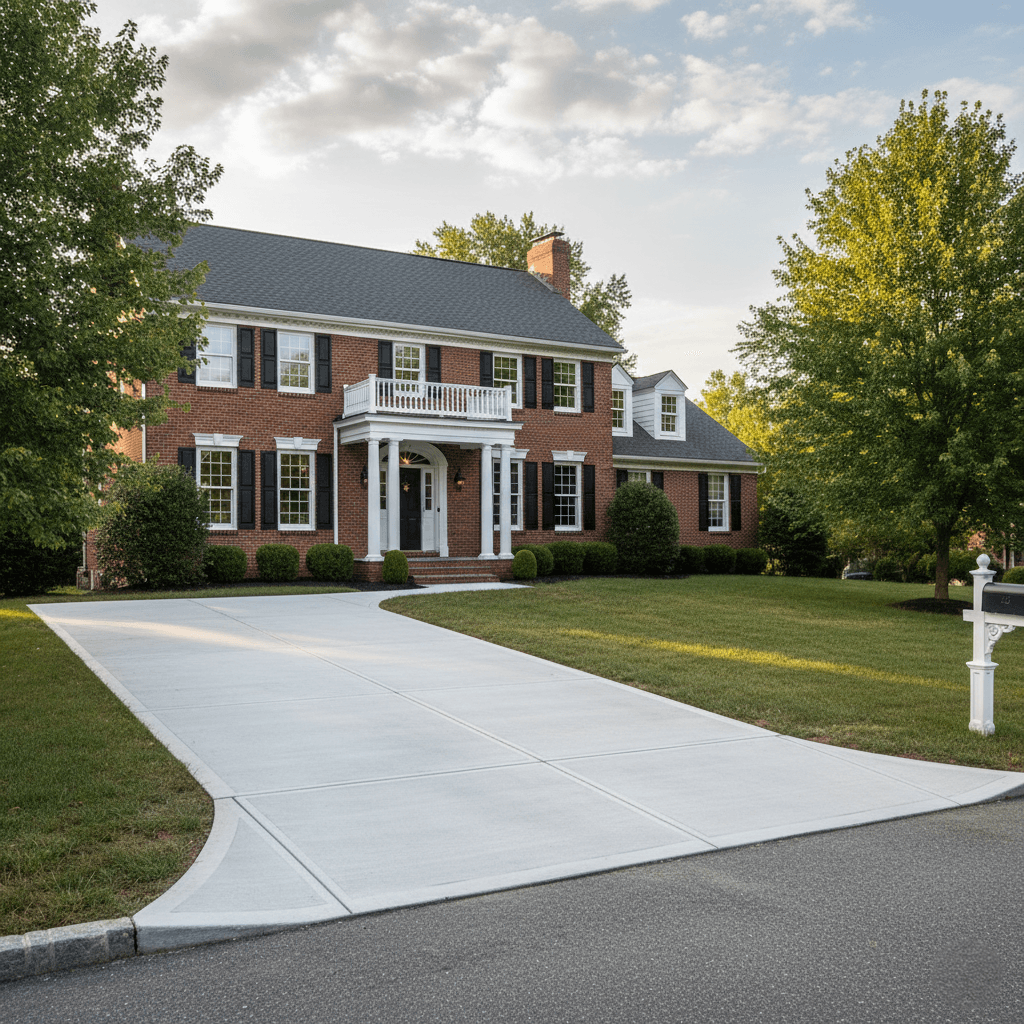
A concrete driveway is much more than just poured concrete. A concrete driveway is a highly engineered system, starting with engineering below grade. We start by properly excavating and preparing the base of your driveway (to provide drainage, prevent settling). Once the base is prepared, we then install the concrete slab, which will be reinforced with either steel or fiber mesh to help prevent cracking. Strategically placed expansion/contraction control joints are installed to allow the concrete to expand and contract due to temperature changes. Once the slab is cured, we install the finish you have chosen and seal the surface to protect it from the elements.
Typical thickness of our concrete driveway slabs ranges between 4-6 inches, depending on the load that the slab will need to bear. We utilize high-strength concrete mix designs that are formulated to withstand the freeze-thaw cycle common in Massachusetts. Our results? Concrete driveways that are free of cracks and remain perfectly level for 30+ years.
Get A Free Quote
Concrete Driveway Design Ideas
Your driveway is an extension of your home and its architectural style. We offer multiple concrete driveway designs to match any aesthetic:
Classic Broom Finish: A simple finish that provides great traction but looks neat and professional. It is best suited for older, traditional homes.
Exposed Aggregate: We expose some of the aggregate (stones) in the concrete so you get a textured, more natural look. Exposed aggregate concrete driveways provide better traction than other surfaces and will help hide small blemishes on the surface.
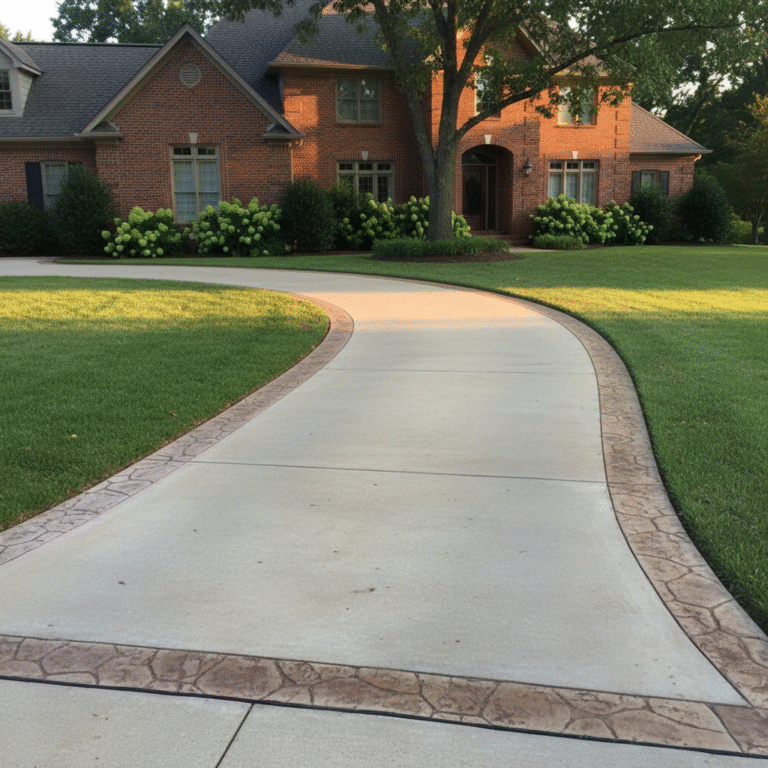
Stamped Pattern Driveways: We can make it appear as though your driveway is made of bricks, stone, etc. The stamping process allows for limitless design options and is priced competitively compared to other high-end paving materials.
Coloring Your Driveway: We can add a built-in color to the concrete or use a stain to match or contrast the color of your house’s siding. Colors available include earth-tone colors and vibrant colors.
Decorative Border: Create a border around your driveway by using a different color or pattern to give it a finished look.
Concrete Driveway vs Asphalt: Making the Right Choice
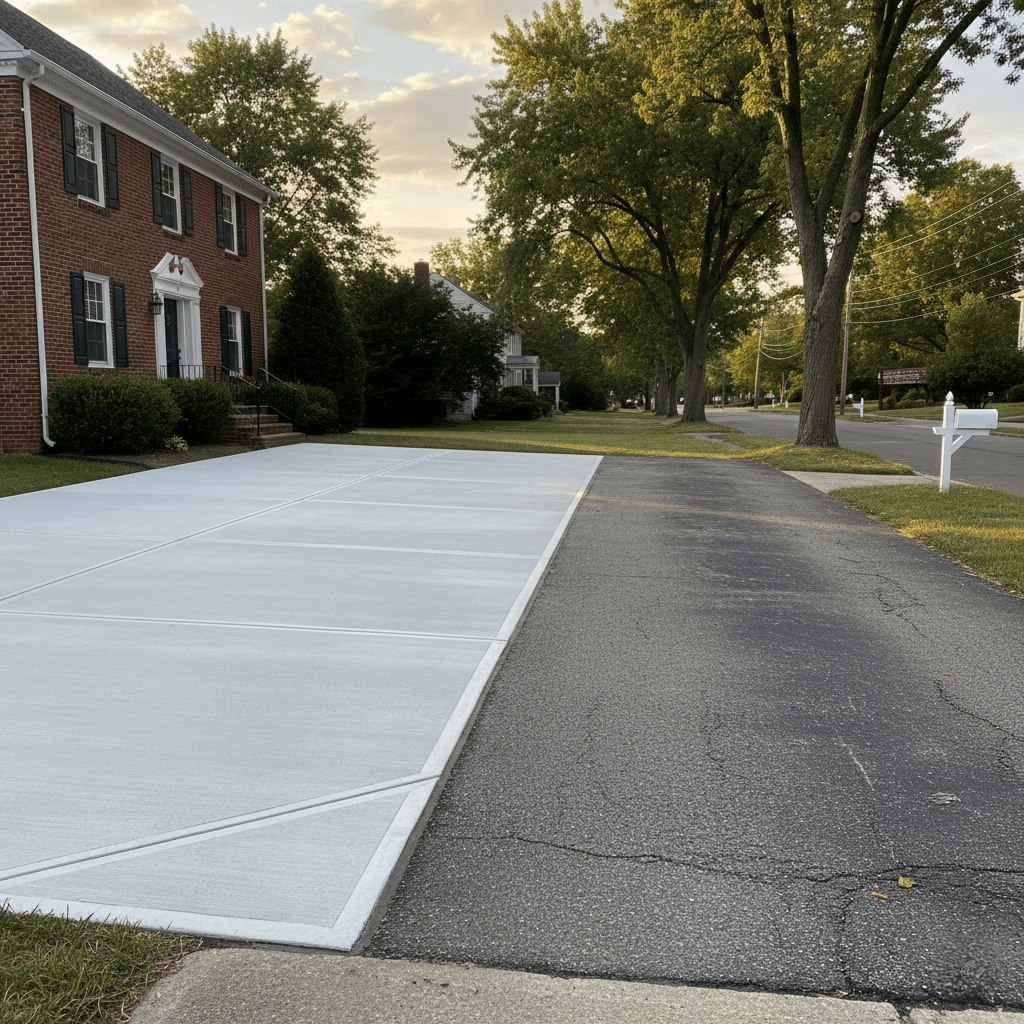
Homeowners often compare concrete driveways vs. asphalt when planning installations. Here’s what you need to know:
Life Span: A properly cared-for concrete driveway will last between thirty and forty years, while an asphalt driveway will usually need to be replaced within fifteen to twenty years.
Maintenance: Sealing is required for a concrete driveway every few years. An asphalt driveway will require seal coating every two to three years as well as occasional crack filling.
Aesthetics: Concrete driveways offer many design possibilities, including various color options, textures, and designs. As such, there are very few color options available for asphalt driveways that include only black or dark gray.
Performance in Weather Conditions: Concrete driveways perform much better than asphalt driveways under extreme temperature conditions (i.e., the hot summers experienced in Quincy). This is important because the surface of an asphalt driveway may become soft under these conditions.
Cost/Value: Although concrete driveways have a higher initial investment than asphalt driveways, their long lifespan and lower maintenance requirements make them ultimately more cost-effective.
Concrete Driveway Installation Process
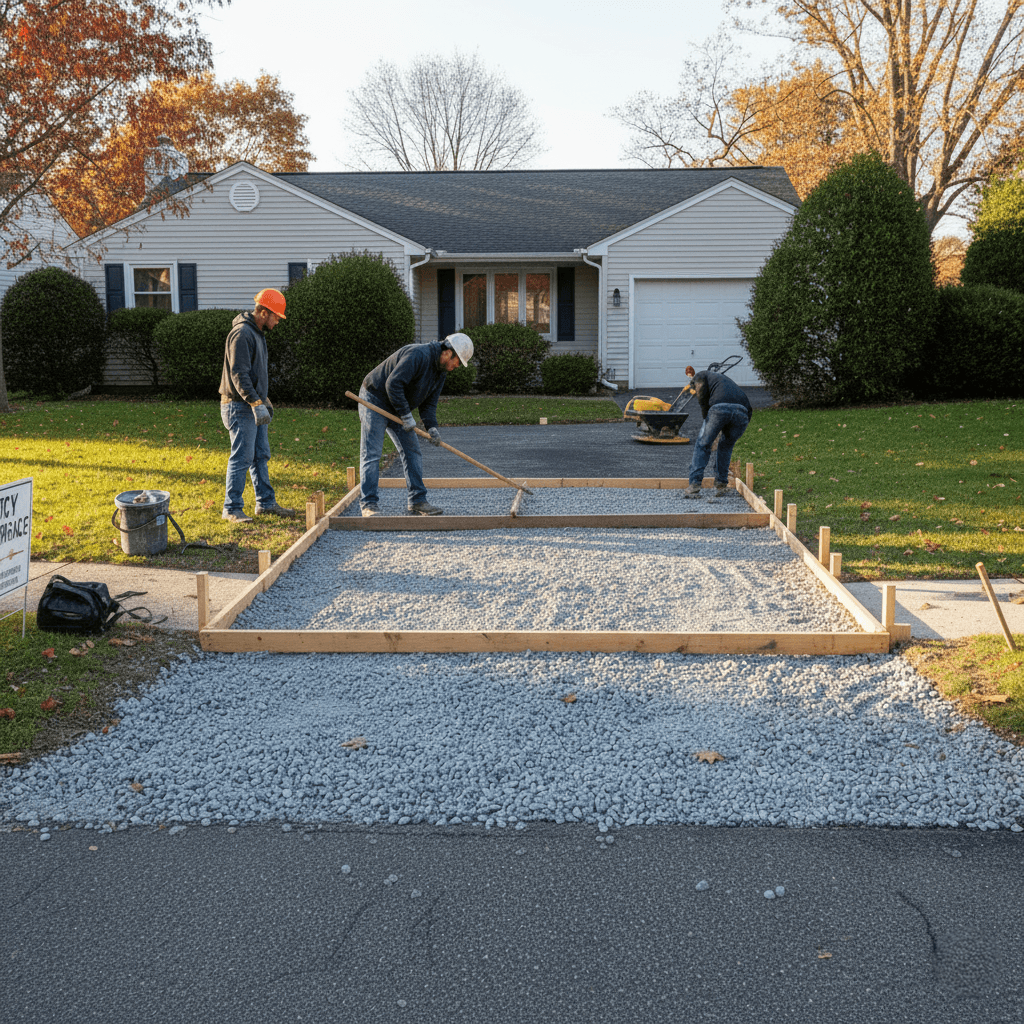
Understanding our installation process helps you know what to expect:
Preparing the Site: Our excavation is done to a depth that is necessary to complete the job, and all of the existing material is removed, as well as the site graded to direct water away from the area where the new driveway will be located.
Installing Base: The first layer (or layers) of a driveway’s base is a compacted gravel bed; this layer is used as a foundation and also allows for drainage and to support the weight of the vehicle(s).
Setting Forms: To give your driveway the shape desired by you, we set up forms around the perimeter and along the edges of the driveway.
Adding Reinforcement: In order to increase the structural integrity of the concrete slab, steel rebar or wire mesh is added to the slab.
Pouring Concrete: We then pour, spread, and level the poured concrete to meet the specifications requested.
Applying Finish: Once the concrete has reached the final stages of its drying cycle, your choice of finish (such as broom finished, exposed aggregate, or stamped) is applied.
Curing and Sealing the Driveway: After curing is completed, we apply a sealant to the driveway to protect it for years to come.
Concrete Driveway Overlay: Refresh Without Replacement
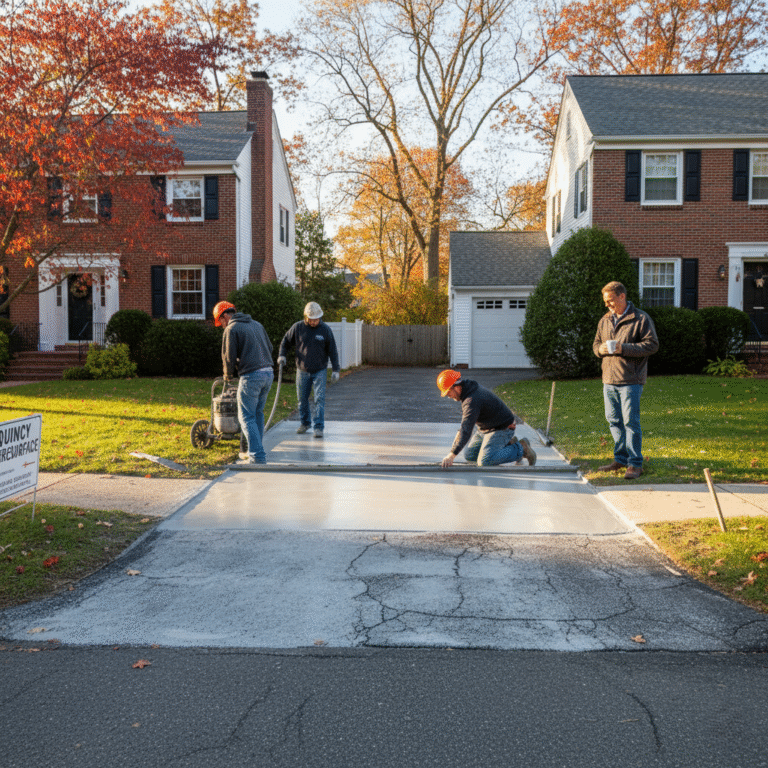
If the current driveway has a solid base but appears to be in poor condition, it can often be repaired inexpensively by overlaying a new layer of concrete (usually between 1 – 2 inches) on top of the current layer. This will give you a newly restored look with all the opportunities of a new design at approximately one-fourth the cost of replacing the entire driveway. Driveway overlays are best suited for areas that have some minor surface damage but do not have any major structural damage.
Understanding Concrete Driveway Installation Cost
The price for installing a concrete driveway is determined by many different items, including how big a driveway will be, what kind of thickness is required for the driveway (as it relates to heavy traffic), how accessible the site is, the complexity of the design, and the condition of the site at the time of the installation. Stamped designs with intricate details are generally going to cost more than a basic residential concrete driveway per square foot. Once we have provided you with a detailed quote for the cost of your concrete driveway, there will be no other hidden fees or unexpected charges. This allows you to make an educated decision regarding your investment.
Ready for a New Concrete Driveway?
Contact Quincy Solid Concrete today for a free consultation and detailed concrete driveway quote. We’ll assess your property, discuss design options, and provide transparent pricing. Let’s create a driveway that enhances your home and lasts for decades.